
Iowa's Wanted List Network
Iowa runs no single warrant portal. There is no statewide list naming every person wanted by every county, and no page that replaces a county sheriff's current records. What the public can see serves narrower purposes. The Iowa Sex Offender Registry keeps a special most-wanted registrants path. The Iowa Department of Corrections posts incident-specific escape or abscondence news. IowaVINE handles custody-change alerts. The U.S. Marshals Service selects some fugitives for public notices. County sheriffs may publish their own wanted or warrant pages. Each has its own scope and update limits.
A wanted notice is a request for help or a safety alert. It is not a jail roster. A custody record shows where someone sits now. A wanted page may cover a person not in custody, a registrant whose status needs attention, or an agency's search tied to one case. So the two answer different questions. Check the issuing agency's details before drawing a conclusion from a name, photo, or old notice.
Official Iowa Wanted Sources
These official channels can narrow your search. Their limits matter as much as their tools. Photos remain on the official pages, where dates, case details, and contact routes sit together.
| Source | What it covers | Photo or status | Official route |
|---|---|---|---|
| Iowa Sex Offender Registry | Active-registrant search, maps, notifications, and a most-wanted registrants path. | Registry information, not a general arrest list. | Use the official registry interface. |
| Iowa DOC news and IowaVINE | Incident-specific work-release escape or abscondence news; custody-change notices. | News item or alert, not a stable statewide absconder roster. | DOC news; the IowaVINE page is linked with its image. |
| U.S. Marshals Service | Selected fugitive profiles and district task-force contacts. | Some profiles include official photos; selection is not comprehensive. | Most-wanted fugitives |
| County sheriff pages | Local warrants, wanted notices, or named-person safety alerts, when published. | Coverage, update timing, and verification differ by county. | Use the Iowa County Directory to reach the relevant sheriff. |
Note: A source can be official and still have a limited date range, narrow purpose, or delay between a status change and a public update.
County Warrant Pages in Iowa
County pages serve a different role. Examples around Iowa include a weekly warrant list in Dickinson County, an unverified warrant portal in Woodbury County, and a Wayne County inmate feature beside separate sheriff wanted and tip sections. These tools are not interchangeable. Check the date and scope first. Confirm an unverified result with the sheriff. Use the Iowa County Directory to reach the county named in a notice. Some sheriffs post photos, others share text lists, and some publish no list at all. A missing web page does not prove a missing warrant, so call the agency or court clerk.
Send Tips to the Named Agency
Tip instructions come from the issuing agency. A registry, sheriff, DOC release, and federal profile can each list different contact routes. Use the phone number, email, or secure form on the current official notice. The U.S. Marshals district directory can help identify the right office when a federal profile leaves the local contact blank. For non-emergencies, share only what you observed. Say where it happened too. Do not post a guess as a fact, and never message a person named in a notice. Keep sensitive tips out of public comment threads. Anonymity and reward terms, when offered, belong to the specific agency or program. Assume nothing unless the notice says so.
- Open the current notice on the agency's official page and confirm it is still active.
- Use only the contact route shown there, and provide the location and time of what you saw.
- Call 911 if there is an immediate threat; otherwise, let trained officers assess the information.
Iowa Warrants Are Not Bookings
An active-warrant question differs from a wanted-list search. A wanted list highlights select people. It is not a complete index of warrants. The Iowa DPS IOWA System is an authorized criminal-justice information network covering wanted and missing-person data, protective orders, and related records. It is not a public statewide warrant search. A county's public page is a separate local tool, with possible gaps, old entries, or a date window.
That distinction cuts both ways. Someone can have an active warrant without appearing on any public wanted page. A person can also appear on a registry or an old agency notice without a new booking or an active warrant. Confirm the county, case number, date, and current status with the sheriff or clerk. Then use Iowa Courts Online for the trial-court case. That gives the answer a notice alone cannot.
Note: A wanted page can lag a court event or release, so confirm status with the agency that controls the record.
Registry Notices Have a Narrow Scope
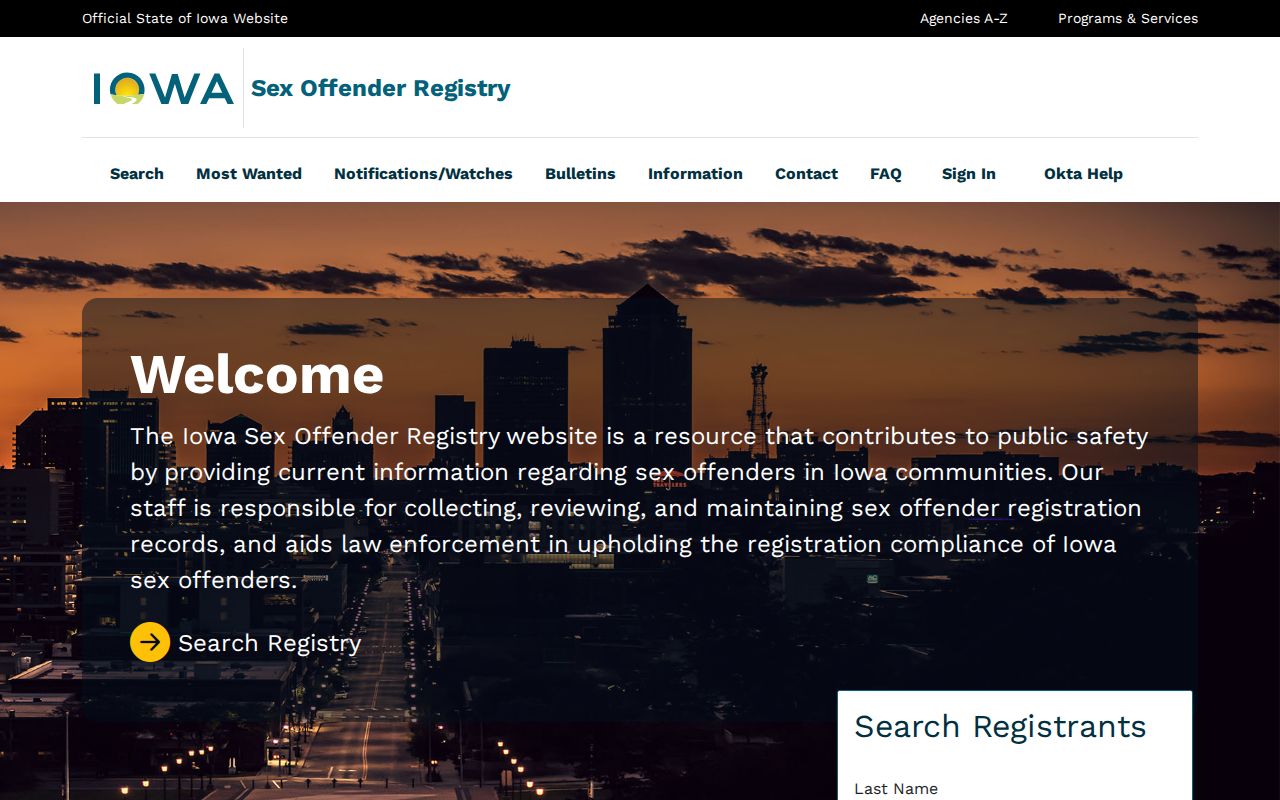
Iowa's Sex Offender Registry is public and offers search tools, a map, alerts, and a "most wanted registrants" section. That section has one job. It tracks registry compliance, nothing else. You will not find a statewide most-wanted list there, a booking-photo archive, or a feed of every new Iowa arrest. Registry entries carry status and offense details. Read those on the registry itself. The Department of Public Safety describes the site as a public search and notification tool, so concerns about a listed registrant go through its own notice and contact options. A map point proves nothing. Nor does an old notice prove current custody. For a recent arrest, start with the county booking source, then the court case.
The official Iowa registry interface keeps a separate "Most Wanted" menu beside its registrant search. No booking photos appear there.
Iowa DOC Escape News and Alerts
The Iowa Department of Corrections posts no single public list of every absconder. Its news page works differently. It announces specific escapes and work-release abscondences. Iowa Code §915.18 sets the duty. The director must file a complaint or warrant and announce an escape or abscondence to law enforcement and news outlets in the area, and the statute text spells that out. A saved news item is not proof anyone is still at large today. The offender locator is separate. That IDOC tool checks state custody, not escape alerts. A profile can confirm a current state record once someone is found, but it will not show whether an old notice still stands.
The IDOC offender search form is the state-custody lookup.
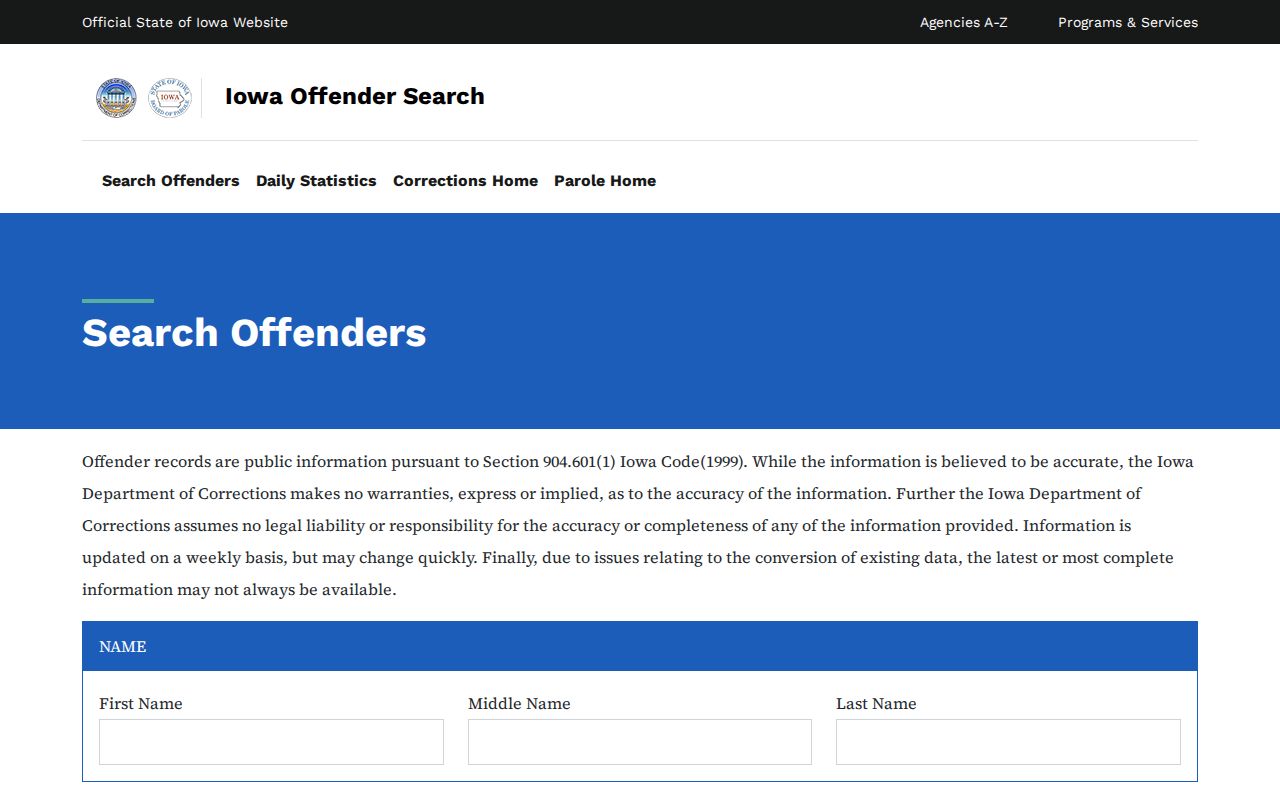
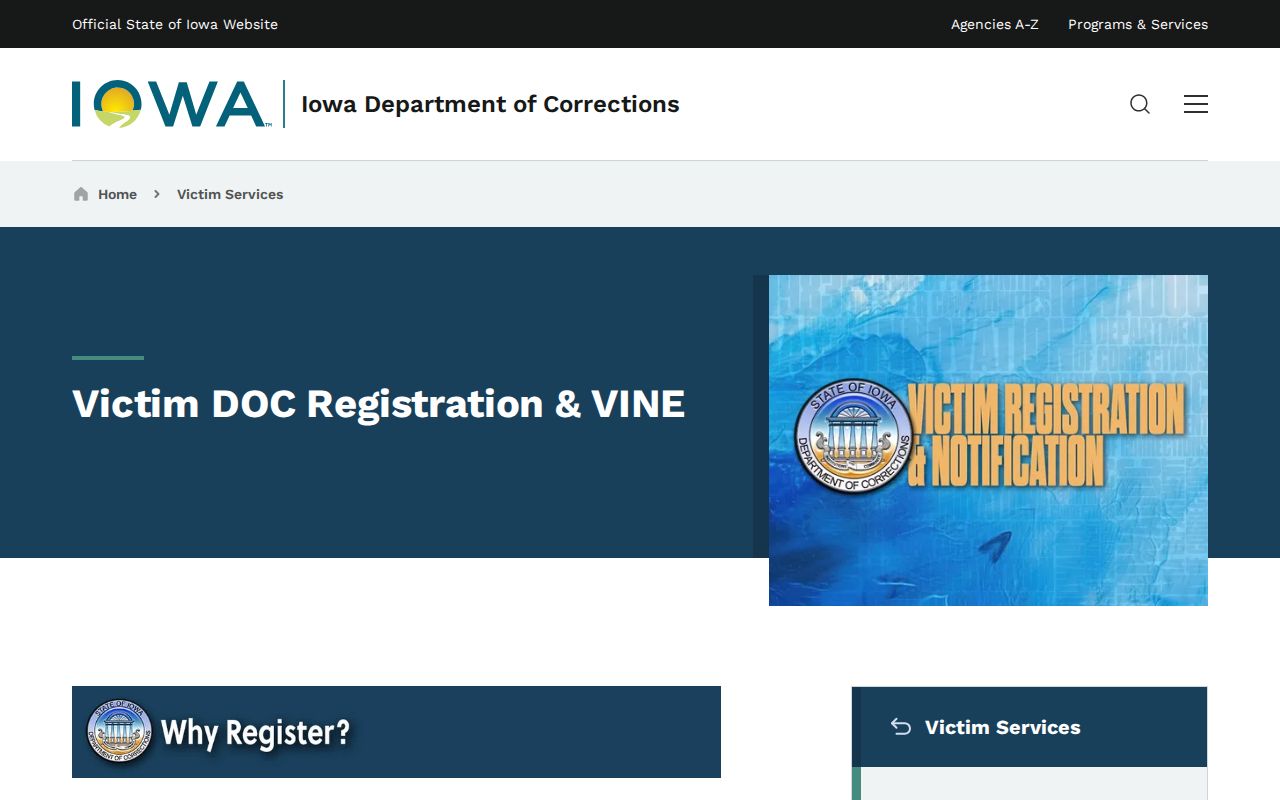
IowaVINE sends alerts for release, discharge, escape, death, or an unusual status. The page lists the number 1-888-742-8463. It can cover a person held in another county. VINE is an alert service, not a mugshot archive or warrant search, so confirm the reason and outcome with the agency notice and court docket.
The Iowa DOC VINE page explains these official custody-change alerts.
Federal Notices Are Selective
The U.S. Marshals district directory covers Iowa. The Northern and Southern District of Iowa pages appear there, and each lists fugitive task-force contacts. A profile may show a photo. Still, that page is not a full Iowa wanted roster or a federal pretrial list. Tips go to the contact details on the notice. For an outcome, check the federal court record or the clerk's file.
View official photos on the agency's own page. A media image, a repost, or an old capture can show a courtroom appearance or a later event rather than the original booking photograph. Check whether the issuing agency still lists the profile.
Note: Federal fugitive profiles are selected notices, while district offices and local sheriffs maintain separate case paths.
Check an Iowa Warrant Carefully
Begin with the county tied to the likely case. Skip broad name searches on unverified portals. A county page helps when the sheriff states what it covers and when it was last updated. If the sheriff posts no search, ask the office or the district court clerk. Either one can point to the right record custodian. Iowa Courts Online can then show public case entries, though some information is withheld or delayed.
- Identify the likely county. Use the event location, arresting agency, or court venue if known. Find the county in the directory and open the sheriff's official site.
- Check the sheriff's current warrant page. Read its search notes and update date. Treat a result as a lead, not confirmation, if the page says it is unverified or does not explain its coverage.
- Call the sheriff or court clerk. Ask which agency issued the record and whether the status is current. Give the name and case number if known; do not rely on a third-party repost.
- Search the public court docket. Use Iowa Courts Online by name or case number. The official search help says a surname search may use at least two letters and the percent sign as a wildcard.
- Request the record if needed. Ask the relevant sheriff or clerk for the existing public record and any access limits. Iowa's Chapter 22 guidance explains the public-record process, but confidentiality exceptions still apply.
A search result is not a served warrant. It is not the full paper court file either. New cases can take about a business day to appear after entry. Dockets update as the clerk enters details, while sealed, confidential, or not-yet-served matters may stay out of public view.
| Route | Best use | Limit to keep in mind |
|---|---|---|
| County sheriff | Confirm a local warrant page or ask which office holds the current status. | Online list scope and update time vary by county. |
| District court clerk | Ask about the court file, case number, and records not shown online. | Some material is confidential or restricted. |
| Iowa Courts Online | Review public trial-court case details, docket, charges, filings, and disposition. | It is not the official complete file; some warrant cases are confidential until service. |
| Public-record request | Seek an existing record from the agency or clerk that holds it. | Access is subject to Iowa Code Chapter 22 and other confidentiality rules. |
The Iowa Courts Online search page tracks public cases.
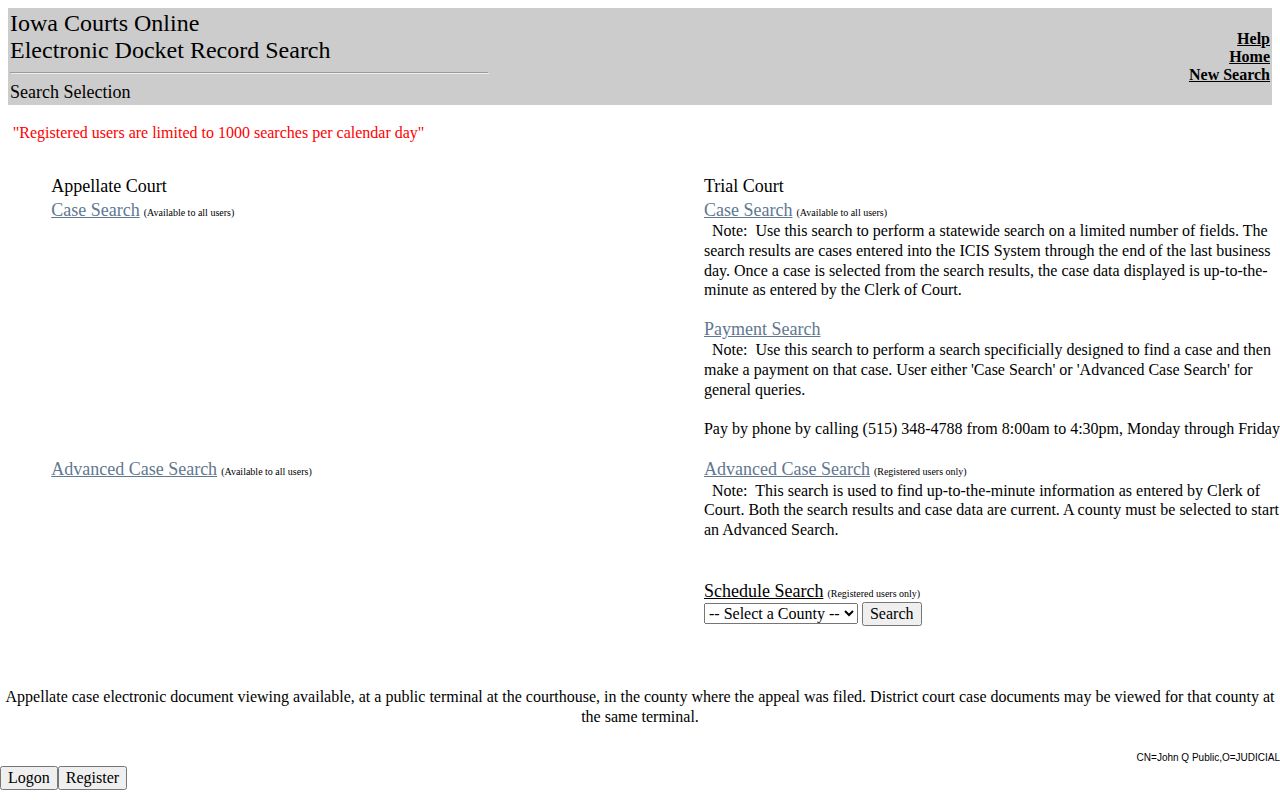
Some warrant cases never surface online. The Judicial Branch's confidentiality restriction chart explains which court records stay off the web and why. Sealed matters are one reason. Its public-record page points people to the county clerk or a courthouse terminal when records stay offline. Never guess a warrant type from a label. Read the order or ask the clerk what it authorizes.
Note: A missing online result may reflect a confidential case, not proof that no court process exists.
Confirm the Iowa Court Outcome
Public cases land in Iowa Courts Online. That is the statewide trial-court search. A name or case number opens the docket, charges, filings, and disposition. A disposition is simply the court's recorded outcome, such as a dismissal, plea, or judgment. Booking entries tell a different story. They carry the charge reported at intake. Later filings can amend that charge, dismiss it, or end the case another way. New case data takes about a business day to appear, and details update as the clerk enters them. The online system is not the official case file. Documents may be confidential, unavailable online, or viewable only through the clerk or a courthouse terminal. For county bookings, try the Iowa arrest lookup path.
Note: Treat an arrest or wanted notice as an allegation or safety alert, then check the current public disposition before repeating a charge as fact.